
How to Fix a Dishwasher Not Cleaning or Draining
A dishwasher not cleaning or draining properly is usually caused by a blocked filter, spray arm, drain hose or waste connection. Switch off the appliance, remove standing water safely, clean the filter and spray arms, then check the drain route. If the problem continues, professional dishwasher repair may be needed.
Why is my dishwasher not cleaning properly?
Poor cleaning is often linked to restricted water flow rather than a failed appliance. Check these common causes:
- Blocked spray arms: Remove the arms if possible and rinse them under a tap. Clear blocked jets with a soft brush or wooden toothpick.
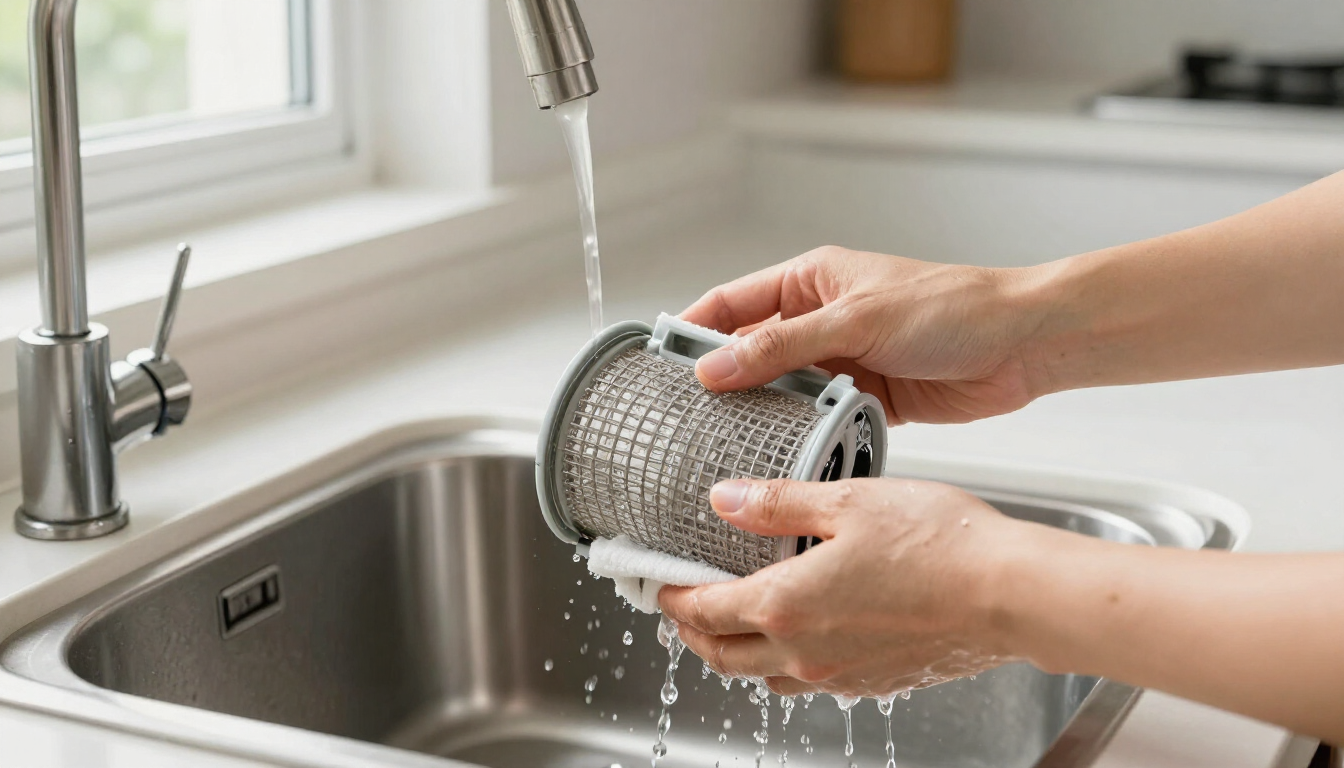
- Dirty filter: Take out the filter, wash it in warm soapy water and remove trapped food or grease.
- Incorrect loading: Do not let plates, pans or cutlery block the spray arms. Face dirty surfaces towards the centre.
- Low-quality or insufficient detergent: Use a suitable dishwasher detergent and follow the manufacturer’s dosage guidance.
- Cold water: If dishes remain greasy, the appliance may not be heating water correctly.
Run an empty hot cycle after cleaning the filter and spray arms. Avoid using washing-up liquid, as it can create excessive foam.
How can I fix a dishwasher that will not drain?
Before arranging a repair, switch off the dishwasher and follow these steps:
- Remove the bottom rack and lift out visible water with a cup or sponge.
- Remove and clean the filter assembly.
- Check the sump area for broken glass, labels or food debris, taking care with sharp objects.
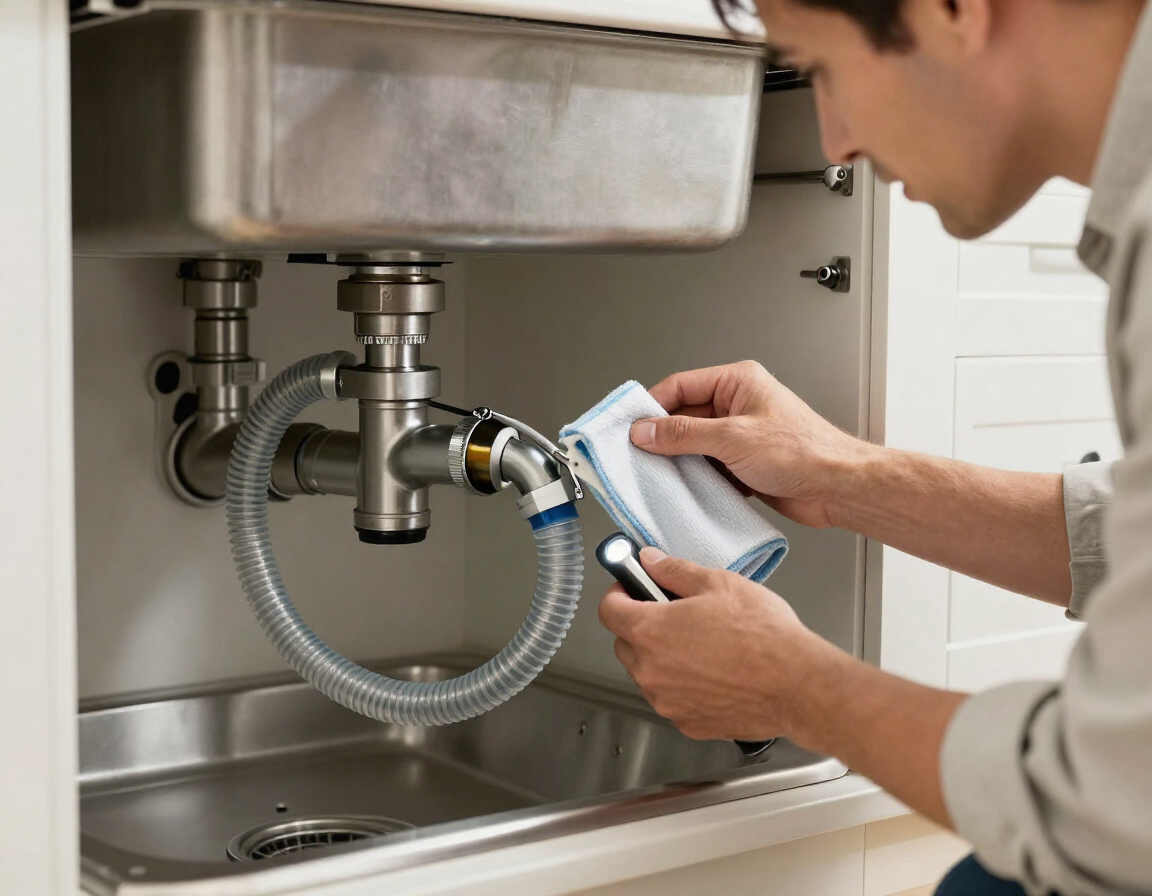
- Inspect the visible drain hose for kinks or crushing.
- If connected beneath the sink, check that the waste connection is not blocked.
A small amount of residual water may be normal, but a pool of dirty water after every cycle indicates a drainage fault.
Quick checks before booking a repair
Confirm that the dishwasher has power, the door closes securely and the water inlet tap is open. Check the display for an error code and consult the appliance manual before resetting it. A reset may clear a temporary fault, but it will not repair a blocked pump, failed heating element or damaged component.
If your dishwasher is leaking, making a grinding sound, tripping the electrics or leaving standing water, stop using it. Do not dismantle electrical or sealed components yourself.
When should you call a professional?
Book a qualified repair if cleaning the filter and checking the hose does not solve the problem, or if the dishwasher:
- Fails to fill, heat or complete a programme
- Drains slowly or repeatedly displays a drain error
- Leaks from underneath the appliance
- Makes unusual humming, grinding or clicking noises
- Trips the circuit breaker
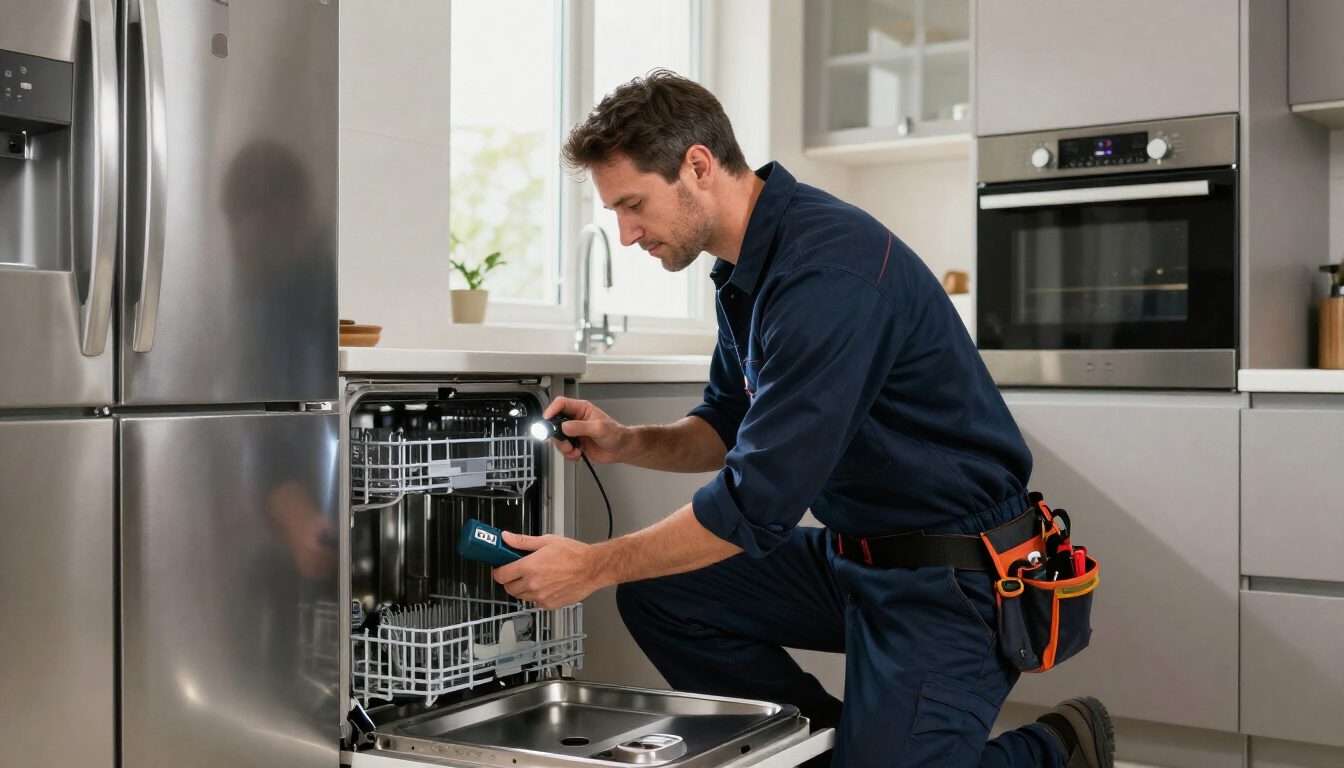
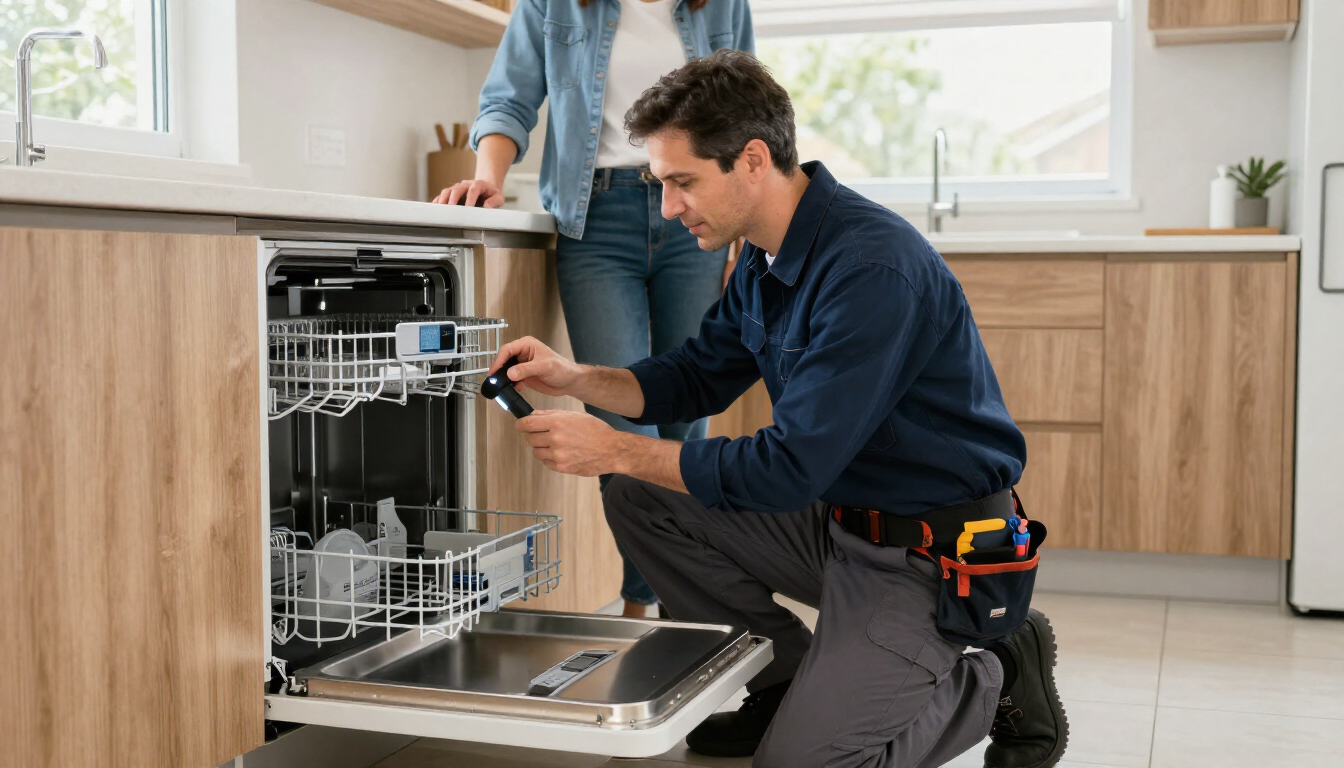
A professional can test the pump, inlet valve, heater, sensors and wiring safely. This is particularly useful for built-in dishwashers, where access and reconnection can be difficult.
For local support, see our dishwasher repair service or explore our wider appliance repair services . We help homeowners and landlords across Bristol, Bath and surrounding areas.
Final takeaway
A dishwasher that is not cleaning or draining properly can often be improved by cleaning the filter, clearing the spray arms, checking loading and inspecting the drain route. Start with these safe, simple checks and run a hot cycle to test the result. If dirty water remains, the machine will not heat, or you notice leaks, electrical issues or unusual noises, stop using it and arrange professional dishwasher repair. For Bristol and Bath homes, compare the symptoms with the available service and contact a qualified engineer when a basic check does not resolve the fault.