
How to Fix an Oven Not Heating: Repair or Replace?
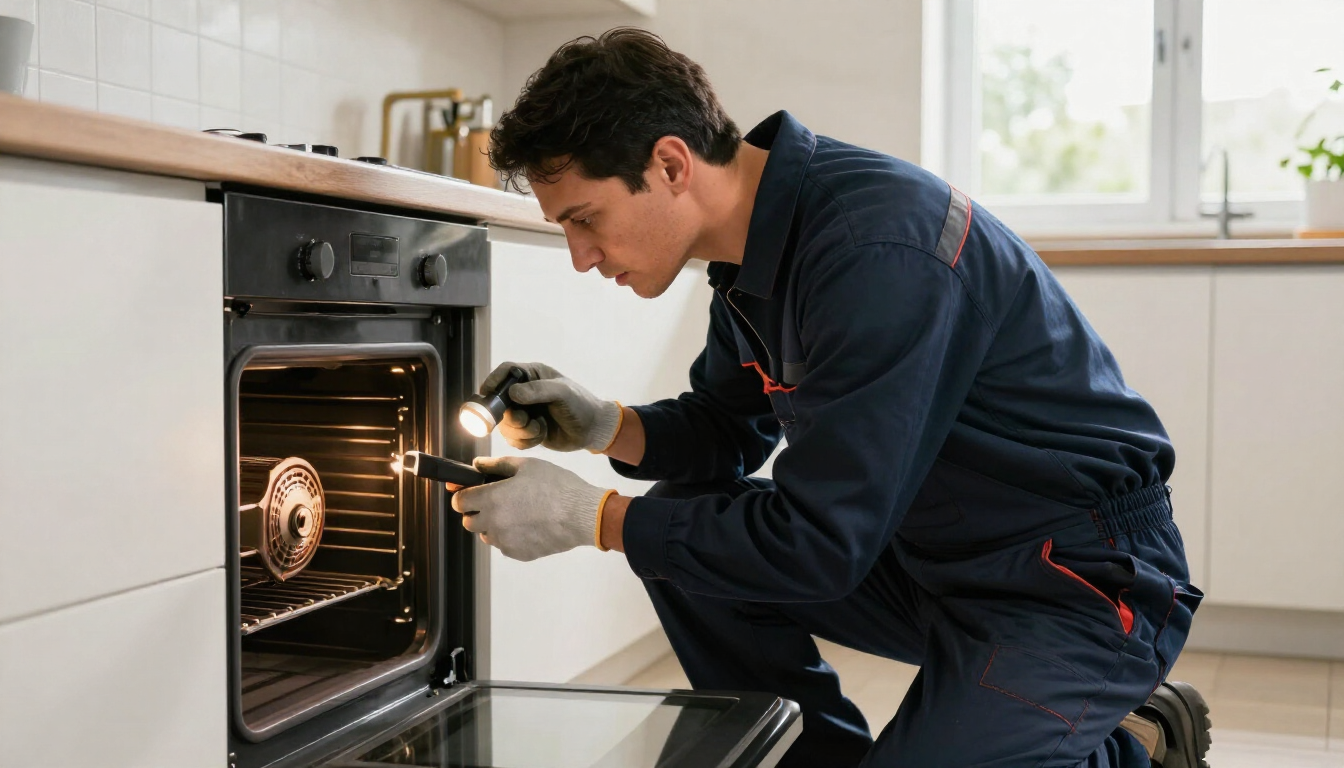
An oven not heating usually has a failed heating element, thermostat, selector switch, fan, or electrical connection. Check the power supply and settings first, but avoid removing panels or testing live parts. For most Bristol and Bath homes, repairing the fault is safer and cheaper than replacing the appliance.
What causes an oven or cooker not to heat?
The most common faults include:
- Failed heating element: The oven may stay cold, heat unevenly, or work only on one setting. A visible break, blister, or dark patch can indicate damage.
- Faulty thermostat or temperature sensor: The oven may not reach the selected temperature or may overheat.
- Broken selector switch: Some functions work while others do not, such as the grill working but the main oven remaining cold.
- Fan or fan-element failure: A fan oven may cook unevenly, make unusual noises, or fail to circulate heat.
- Electrical or control-board fault: A tripped breaker, loose connection, or failed electronic control can stop heating altogether.
Gas cookers can also have ignition, burner, safety valve, or thermocouple problems. Gas components should only be inspected by a suitably qualified professional.
What can you safely check yourself?
Before booking an oven repair, switch the appliance off and check:
- Whether the cooker or oven has power and the circuit breaker has not tripped.
- Whether the clock or timer is set correctly; some ovens will not heat in automatic mode.
- Whether the correct cooking function and temperature are selected.
- Whether the door closes properly and the seal is not badly damaged.
- Whether the element shows obvious damage, without touching it.
Do not remove covers, handle wiring, or test electrical components unless you are qualified. If you smell gas, turn off the supply if safe, ventilate the room, and seek urgent professional help.
Is it worth repairing an oven that is not heating?
Usually, yes. Repair is often worthwhile when the appliance is relatively modern, in good condition, and the fault is limited to an element, thermostat, switch, fan, or seal. A repair also avoids the cost and disruption of buying and installing a replacement.
Repair is especially practical when:
- The oven is less than 10 years old.
- The fault is clear and parts are available.
- The appliance is built in or matched to other kitchen units.
- The repair cost is substantially lower than replacement.
- The oven has otherwise performed reliably.
For local help, see our oven repair service in Bristol or cooker repairs service . We provide same-day and next-day appointments across Bristol, Bath, and surrounding areas, subject to availability.
When should you replace the appliance?
Replacement may make more sense when the oven is very old, has repeated faults, shows significant corrosion, or needs an expensive control board. Consider replacement if the estimated repair cost approaches around half the price of a comparable new appliance.
Also compare energy efficiency, capacity, installation requirements, and spare-parts availability. A replacement is not automatically better: a new appliance can involve delivery, fitting, disposal, and adapting kitchen units.
How long does an oven repair take?
Many common repairs can be completed during one visit if the correct part is available. Heating elements, thermostats, seals, and switches are often straightforward for an experienced engineer. More complex electronic faults may require diagnosis, ordering a part, and a second appointment.
When requesting an assessment, provide the appliance brand, model number, fault symptoms, and whether the oven is electric or gas. This helps the engineer prepare and may reduce delays.
Oven repair or replacement: what is the best choice?
An oven not heating is commonly caused by a replaceable component, so arrange a professional diagnosis before buying a new appliance. Repair is generally the better option for a sound, newer oven with one clear fault. Replacement is more suitable for an old, unreliable, damaged, or uneconomical appliance. Start by checking the power and controls safely, then compare the likely repair cost with the price of a suitable replacement. If you need a qualified assessment in Bristol or Bath, contact our appliance repair team to discuss the symptoms and arrange a visit.